
OCCAM stands for Operationalising Climate Change Adaptation and Mitigation for aquaculture
OCCAM is a four-year Horizon Europe project developing innovative, science-based solutions to help the European aquaculture sector adapt to and mitigate climate change.
The OCCAM project envisions a resilient, sustainable, and climate-smart future for European aquaculture. Guided by the principle of Occam’s razor—favouring the simplest effective solutions—it aims to develop, test, and scale innovative, practical, and replicable strategies to address the complex challenges posed by climate change. Through a collaborative, multi-actor approach involving industry leaders, research institutions, and policy stakeholders, OCCAM will pilot a suite of adaptation and mitigation solutions across nine diverse case studies. The project seeks to empower the aquaculture sector with actionable knowledge, scalable technologies, and policy-ready recommendations that reduce environmental impact while enhancing competitiveness, food security, and socio-economic sustainability across Europe.
Case Studies
The European aquaculture sector is increasingly vulnerable to the complex and compounding effects of climate change. Rising water temperatures, extreme weather events, ocean acidification, and shifting precipitation patterns are disrupting aquatic ecosystems and threatening the viability of fish, shellfish, and seaweed farming. These environmental stressors are leading to reduced water quality, increased disease outbreaks, and higher mortality rates in farmed species. At the same time, aquaculture operations are under pressure to reduce their own environmental footprint, particularly greenhouse gas emissions, while maintaining productivity and profitability. Many farms, especially small and medium-sized enterprises, lack the tools, data, and capacity to assess and respond to these risks effectively, leaving them exposed to both ecological and economic instability.
Adding to these environmental pressures are regulatory and market-driven demands for greater transparency and sustainability. The sector must now navigate a rapidly evolving landscape of sustainability reporting requirements, such as the EU’s Corporate Sustainability Reporting Directive and taxonomy for sustainable activities. However, many aquaculture producers are unprepared to meet these obligations due to limited access to standardized methods, digital tools, and scientific guidance. Furthermore, the lack of harmonized policy frameworks and scientific advice tailored to aquaculture hinders coordinated action across regions. These challenges are compounded by the need for scalable, cost-effective solutions that can be adapted to diverse production systems and species. OCCAM directly addresses these gaps by developing practical, science-based tools and strategies to help the aquaculture sector adapt to climate change, reduce emissions, and meet sustainability goals.
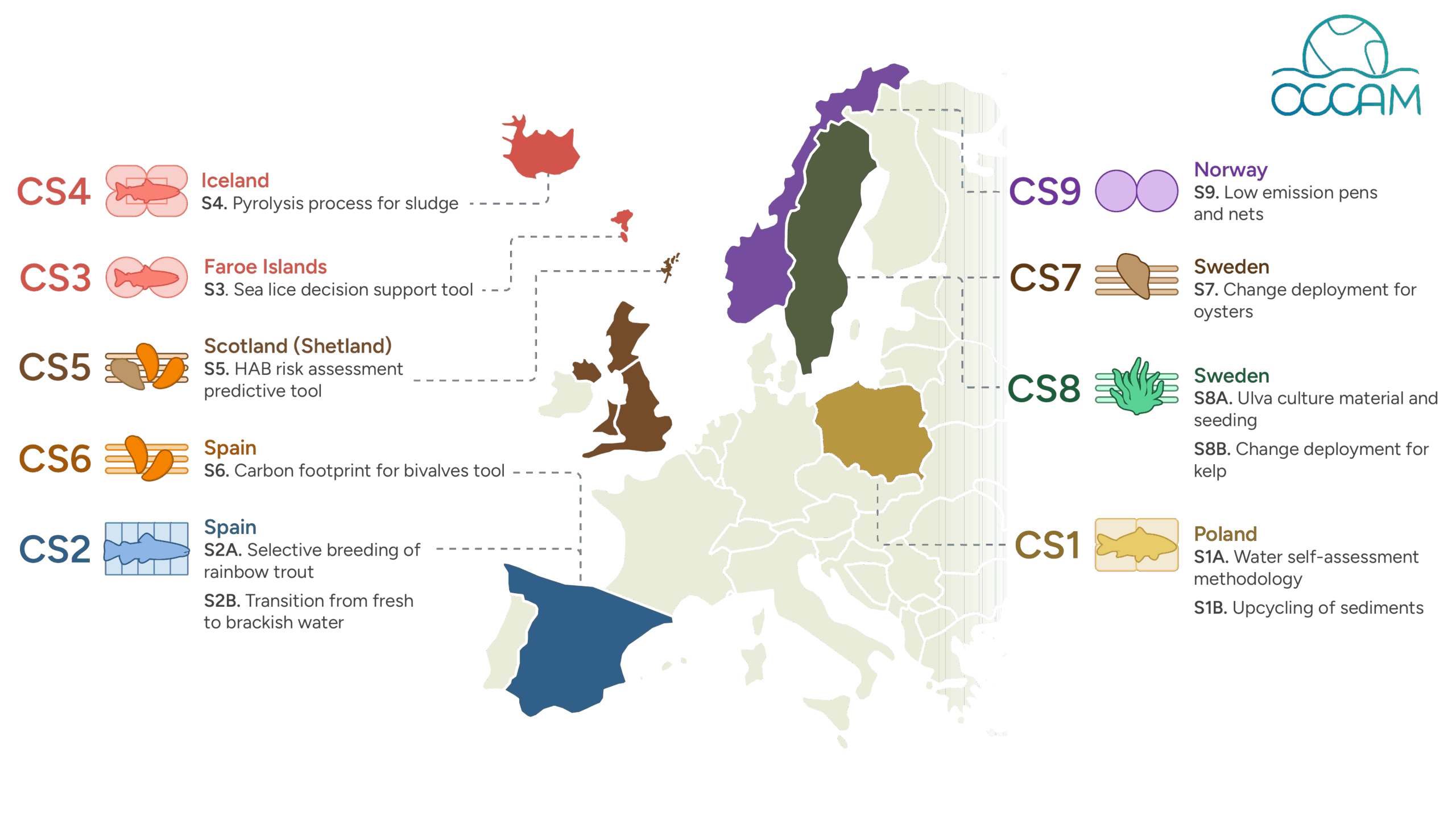
OCCAM aims to develop simple, scalable, and climate-resilient solutions for European aquaculture by piloting innovative adaptation and mitigation measures that enhance environmental sustainability, reduce emissions, and strengthen the sector’s capacity to respond to climate change.